


NYU Around the World
Schools
- Arts and Science College of Arts and Science College of Dentistry College of Global Public Health Rory Meyers College of Nursing Courant Institute of Mathematical Sciences Gallatin School of Individualized Study Graduate School of Arts and Science Institute of Fine Arts Institute for the Study of the Ancient World Leonard N. Stern School of Business Liberal Studies Program Robert F. Wagner Graduate School School of Law School of Medicine School of Professional Studies Silver School of Social Work Steinhardt School Tandon School of Engineering Tisch School of the Arts
PhD Students
How can we develop better retrieval and generation methods that can empower LLMs to be more reliable, controllable, and capable of solving complex real-world tasks?
How can machines better understand creative contents, such as music, language, programs and mathematical proofs, which has complex and recursive structures built on themselves.
How can the learning of machines help humans learn music? How do we unlock the potential of a multi-modal high-throughput human-computer interface for music education?

Can mobile charging, an emerging charging method, be the prominent solution to fulfill the efficient utilization of charging infrastructure for electric vehicles (EVs)?
How can we enable Reinforcement Learning algorithms to efficiently generalize across domains with significant gaps and even across different modalities?
How does mathematics explain the unexpected effectiveness of the Transformer architecture across diverse tasks? What do an interacting particle system and a prompt for ChatGPT have in common?
How can intuitive and seamless tools be designed to enable users to effortlessly create content using machine learning models?
In what manner might we augment the intelligence of our transportation system while harnessing truck platooning to further its modernization and efficacy?
What are the patterns a neural network will converge to at the terminal phase of training and how will it relate to generalization error? How to build theoretical tools to deal with nonlinearity of neural networks?
Hidden within the echo of notes scripted by voices now silent, can machines delicately unravel the fractal tapestry of patterns, where echoes of motifs nestle within each other, creating a multidimensional labyrinth of music?
How can one infer the parameters and structure of a global mean field model from real-world data?

How can we enhance electric vehicle charging to optimize the energy ecosystem for greater sustainability and reduced carbon emissions?
How to consider the grain interaction and hysteresis effect in ferroelectric materials?
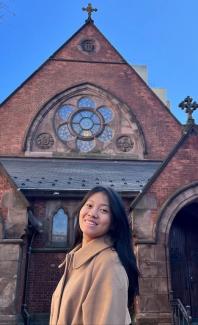
How can massive medical data be effectively leveraged using deep learning approaches to address personalized healthcare?
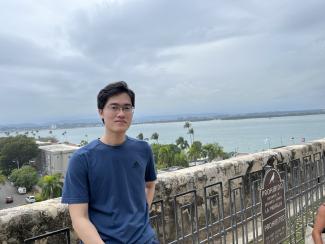
How can we properly control the traffic stream such that the interactions between connected autonomous vehicles and human-piloted vehicles can help alleviate traffic congestion rather than end up worsening it?

Into what constituent dimensions can we decompose music? How can we establish the mapping between these dimensions? Is a hierarchical structure necessary for this mapping? What does a compact representation of these dimensions resemble?
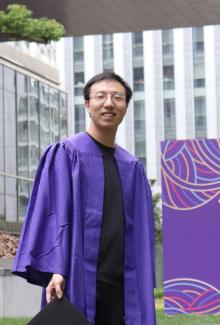
How to build accessible personalization systems based on multimodal data and large pre-trained models?
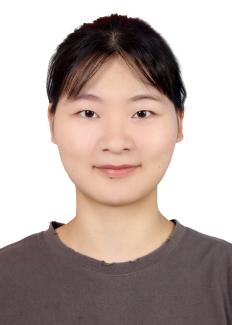
How to allocate resources efficiently in 5G RAN to enhance service QoS satisfaction rates within the constraints of extremely tight scheduling time?
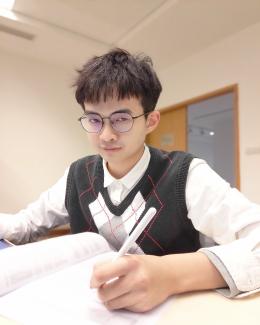
Whether and how can we leverage modular vehicles to boost the efficiency of different types of transportation systems?
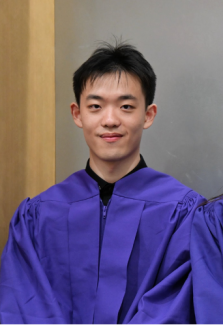
How to let robots learn from the richness of multimodal data and adapt with human-like flexibility?

How to generate realistic synthetic network traces while protecting sensitive information at the same time so that corporations and institutions can share them without privacy concerns?

What role can reinforcement learning play in promoting social good within multi-agent systems and generative AI?
How can we design robust and efficient multimodal graph learning frameworks that leverage large language models to effectively capture deep structural and semantic patterns across diverse data modalities?
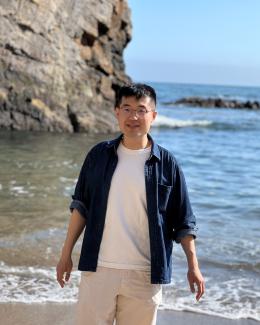
Can machines understand the language and take part in the music creation process? Can artificial intelligence reveal humans’ innate musical intelligence and help ourselves understand the language we use better?
How to speed up model inference with minimal performance loss? How to design new computer systems with LLM?

How to categorize the hardness of computational problems, and how to make use of it to build secure cryptographic primitives and schemes?

What kinds of mathematical tools are useful to interpret the behavior of (deep) neural networks and the performance of algorithms used in deep learning? And how do we interpret them?
How to create personalized learning plans, materials, teachers, or learning partners for users with different cognitive levels, learning habits, or neurodiversity?

How do we recover information from noisy data if the desiring signal is of some special structures and how can we analyze these algorithms?
How can we leverage geometric properties and reductions to prove the hardness of algorithmic problems such as maintenance of maximal cliques in a dynamic set?