


Abstract
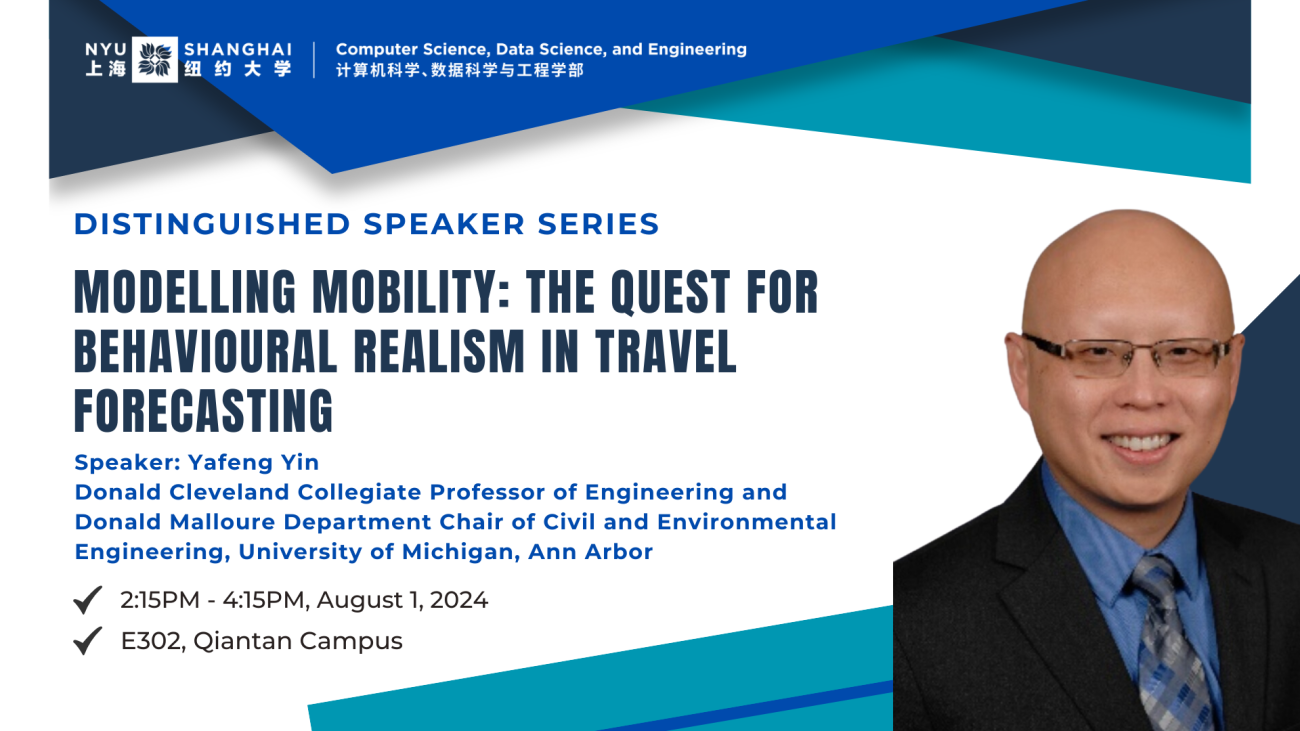
Travel forecasting stands at the forefront of shaping future transportation landscapes, providing essential insights into the patterns of people and goods movement within a region. This modelling domain is crucial for guiding infrastructure development, policy adjustments, and the strategic planning to support growth. In this presentation, we delve into the transformative journey of travel forecasting methods over the past seven decades, tracing their evolution from the aggregate, zone-based four-step models from the 1950s to today's sophisticated micro-behavioural activity-based models. We explore the paradigm shift in transportation network modelling, highlighting the progression towards increased behavioural realism. This shift has seen the conceptualization of travellers evolve from perfectly rational actors with deterministic behaviour, to 'economic individuals' maximizing random utility, and finally to 'social beings' with bounded rationality. Our discussion highlights the interdisciplinary contributions from operations research, economics, and machine learning that have significantly enriched methodological approaches in travel forecasting. Furthermore, we examine the burgeoning role of artificial intelligence in travel forecasting, focusing on its potential to revolutionize model development.
Biography
Dr. Yafeng Yin is Donald Cleveland Collegiate Professor of Engineering and Donald Malloure Department Chair of Civil and Environmental Engineering at University of Michigan, Ann Arbor. He works on transportation systems analysis and modeling, and has published over 150 refereed papers in leading academic journals. He currently serves as Area Editor of Transportation Science and Associate Editor of Transportation Research Part B: Methodological and was the Editor-in-Chief of Transportation Research Part C: Emerging Technologies between 2014 and 2020. Dr. Yin has received recognition from different institutions, including the Monroe-Brown Foundation Education Excellence Award, and Faculty-Staff Partnership Award from College of Engineering at University of Michigan, a Doctoral Mentoring Award from University of Florida, Outstanding Leadership Award by the Chinese Overseas Transportation Association (COTA), and Stella Dafermos Best Paper Award, Ryuichi Kitamura Paper Award, and Kikuchi-Karlaftis Best Paper Award from Transportation Research Board of the National Academies of Sciences, Engineering, and Medicine. Dr. Yin received his Ph.D. from the University of Tokyo, Japan in 2002, his master’s and bachelor’s degrees from Tsinghua University, Beijing, China in 1996 and 1994 respectively.